The Seedling
a beginner scrollstory
This essay demonstrates the simplest ScrollStory approach—perfect if you’re just learning Markdown or want students to focus on writing rather than complex formatting. As you scroll through, notice the clean, uncluttered design that lets content breathe.
What makes this a “Seedling” essay? It uses only basic components: section headings, images with captions, pull quotes, alert boxes, and footnotes. No background switching, no side-scrolling—just straightforward digital storytelling that’s more visually engaging than a standard web page.
The text below is mostly filler to show how an essay flows, but we’ll call out key features as you encounter them.
The Hero Header
When you loaded this page, the image above filled the entire browser window — that’s a hero header. The site navigation bar disappeared into the image rather than sitting above it, keeping the full visual impact intact. Scroll down a little and notice the essay content begins below the image.
Hero headers are controlled by three front matter fields at the top of this file:
header-image: images/your-photo.jpg
header-title: Your Title Here
header-subtitle: a short description
No header-tier means hero by default — the image fills 100% of the viewport height. You can also set header-position to adjust which part of the image is visible (useful when the focal point isn’t centered).
Your First Section Heading
 on Unsplash.](/HIST-1105/scrollstories/seedling/images/garden-path.jpg)
A garden path winding through lush greenery. Photo by Tim Cooper on Unsplash.
This paragraph sits next to a right-aligned image. The ScrollStory layout gives images breathing room—you’ll never see cramped text squished against a photo. The spacing and typography are designed to feel more like a magazine than a typical web page.
Notice the caption below the image includes a clickable source link. This is how you maintain scholarly rigor while keeping the visual design clean.
Footnotes work normally in ScrollStories — you can place them anywhere in the page flow.1
Lorem ipsum dolor sit amet, consectetur adipiscing elit. Vivamus pretium, nibh vel posuere pretium, neque ipsum maximus libero, ac maximus quam ante sit amet dolor. Integer pharetra semper sem sed sagittis. Curabitur mauris tortor, elementum non felis id, hendrerit efficitur metus.
Sed efficitur leo in magna pretium, euismod malesuada risus interdum. Proin sed libero et enim pulvinar convallis non eget est. Sed ultrices dui vitae enim semper accumsan. Duis quis aliquam nulla.
Standalone Images
Not every image needs text beside it. The standalone figure sits within the text flow with its own caption. Here’s one centered in the page:

Close-up of green leaves — a standalone figure, centered, at 65% width.
You can also float standalone images left or right so text wraps around them:
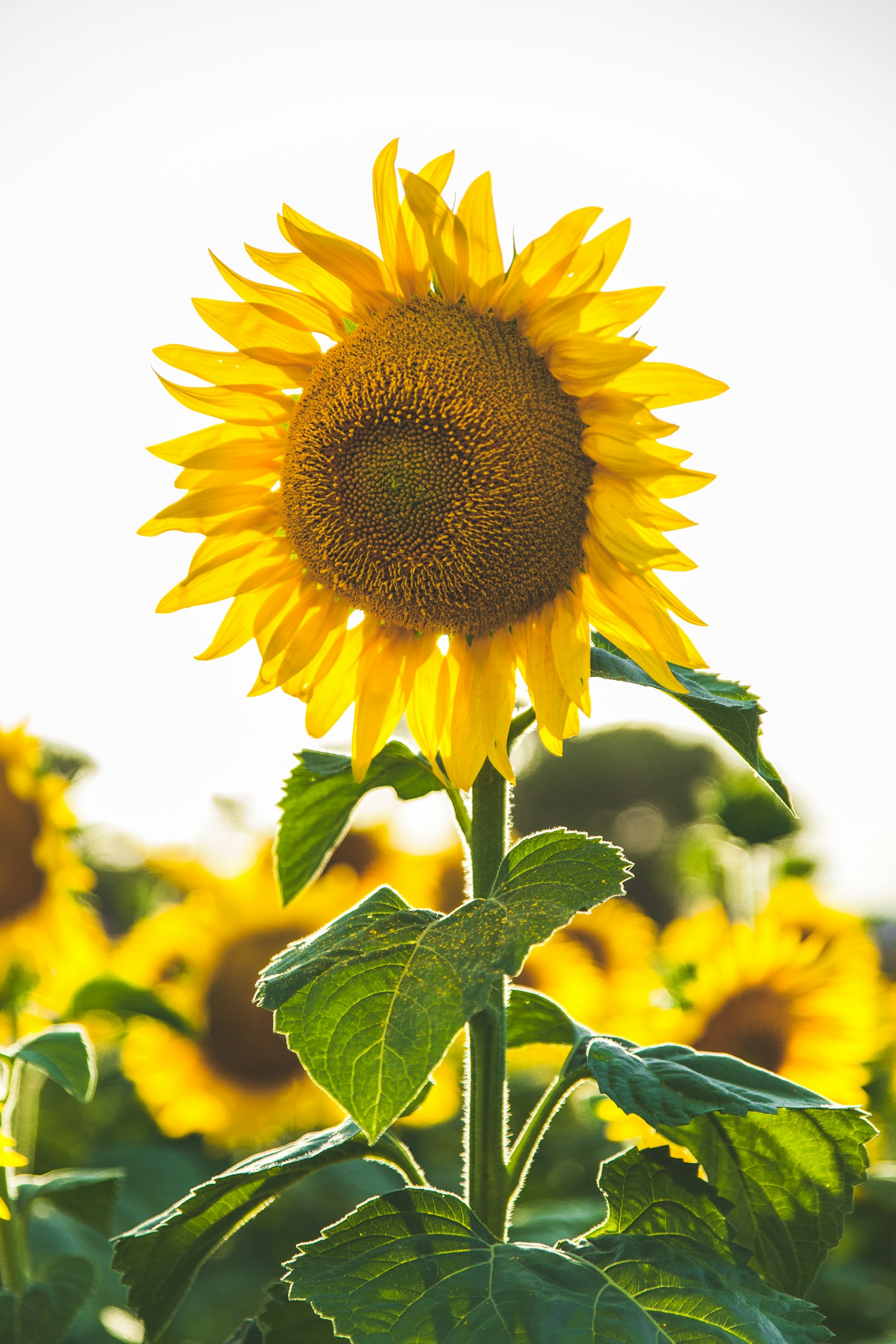
A sunflower at 35% width, floated right.
This text wraps around the sunflower image because it uses class="right". The width parameter controls how much space the image takes. For right-floated images, 30–40% usually works well — any larger and the remaining text column gets too narrow to read comfortably.
Praesent sed vehicula velit, vel hendrerit neque. Vivamus scelerisque sed nunc nec congue. Curabitur sapien risus, finibus id tincidunt iaculis, porta et ipsum. Cras eu mollis sapien. Sed a mauris finibus orci molestie mollis. Duis eros odio, fringilla et pulvinar vitae, eleifend quis elit.
Section Headings Create Visual Breaks
Each section heading (marked with ## in Markdown) creates a clear visual break in your essay. This helps readers navigate long-form content and gives you natural places to shift topics or introduce new ideas.
Why this matters for students: Breaking essays into clear sections makes writing more manageable. Write one section at a time, preview it, then move to the next. No need to tackle the entire essay at once.
Praesent sed vehicula velit, vel hendrerit neque. Vivamus scelerisque sed nunc nec congue. Curabitur sapien risus, finibus id tincidunt iaculis, porta et ipsum. Cras eu mollis sapien. Sed a mauris finibus orci molestie mollis.
Pull Quotes Add Emphasis
Pellentesque viverra hendrerit sapien eu consequat. Curabitur leo ante, vestibulum a tincidunt eget, placerat eu nunc. Donec ut sem mi. Vivamus commodo nec sem eget pretium. Nulla ullamcorper volutpat venenatis.
The pull quote you just saw is created with a simple include command in Markdown. It’s one of many reusable components in Xanthan. You can put important quotes, key statistics, or memorable phrases in these boxes to create visual interest and emphasize crucial points.
Duis eros odio, fringilla et pulvinar vitae, eleifend quis elit. Sed eleifend lectus in bibendum elementum. Vivamus ut velit dignissim, cursus libero nec, commodo orci. Morbi lacus metus, posuere ut pretium ac, malesuada id ligula. Lorem ipsum dolor sit amet, consectetur adipiscing elit. Sed consequat, lacus id blandit ornare, mi nisi rutrum ante, vitae dignissim mauris nisl mattis nisl.
Left-Aligned Images
 on Unsplash.](/HIST-1105/scrollstories/seedling/images/garden-cottage.jpg)
A cottage garden path. Photo by Christina Boon on Unsplash.
Images don’t have to be on the right. Here’s a left-aligned image — the text wraps on the other side. Left-aligned images work well when you want to create a different visual rhythm within your essay.
Mixing left and right placement keeps readers’ eyes moving, which prevents the page from feeling monotonous. Try alternating sides as you write.
Subsection Headings (Optional)
If you need more structure within a section, use subsection headings (marked with ###). These are slightly smaller than main section headings and help organize complex topics without breaking up the flow too much.
Most student essays won’t need subsections—stick with main sections (##) unless you’re writing something particularly detailed. Simpler is usually better.
Duis ut dui dolor. Integer eu lectus at tellus accumsan euismod eget a ligula. Morbi venenatis, elit eu varius fermentum, ligula est dictum massa, sit amet ullamcorper augue nisl ut nunc. Integer placerat vitae metus vitae faucibus.
Alert Boxes for Key Information
Sometimes you need to draw attention to something important — a tip, a warning, or a key piece of context. Alert boxes do this:
Tip
Alert boxes come in several colors: info (blue), warning (yellow), danger (red), and success (green). Use them sparingly — if everything is highlighted, nothing stands out.
Alert boxes support full Markdown inside, including bold, links, and lists. They’re especially useful in instructional essays where you need to flag things readers should pay attention to.
Block Quotes for Extended Quotations
Sed efficitur leo in magna pretium, euismod malesuada risus interdum. Proin sed libero et enim pulvinar convallis non eget est. Sed ultrices dui vitae enim semper accumsan. Duis quis aliquam nulla. Aenean scelerisque lacus vel pretium viverra.
This is a block quote, created by putting a
>symbol before your text. Use these for extended quotations from primary sources, scholarly works, or historical documents. They’re visually distinct from pull quotes—block quotes span the full text width, while pull quotes float to the side.
Block quotes work well when you want to quote an entire paragraph or passage, while pull quotes are better for short, punchy excerpts you want to highlight visually.
The Rhythm of a ScrollStory
By now you’ve scrolled through several sections and noticed the rhythm of a ScrollStory: heading, text, image, text, pull quote, text. This creates a visual cadence that keeps readers engaged without overwhelming them.
For your own essay: Think about pacing. Where do readers need a visual break? Where should an image reinforce your argument? When does a pull quote emphasize a key point? These decisions make the difference between a wall of text and an engaging narrative.
Lorem ipsum dolor sit amet, consectetur adipiscing elit. Vivamus pretium, nibh vel posuere pretium, neque ipsum maximus libero, ac maximus quam ante sit amet dolor. Integer pharetra semper sem sed sagittis. Aliquam in sapien mauris. Aliquam erat volutpat.
What You’ve Learned So Far
If you can create this Seedling essay, you can:
- Structure content with section headings
- Add images with captions and source links (both standalone and wrapped with text)
- Place images on either side of the page (left or right)
- Include footnotes for citations
- Use pull quotes for emphasis
- Format block quotes for extended quotations
- Add alert boxes for tips and warnings
That’s enough to create compelling digital scholarship. The Sapling and Forest essays add more sophisticated features, but this foundation works for most student projects and many professional ones too.
Duis eros odio, fringilla et pulvinar vitae, eleifend quis elit. Sed eleifend lectus in bibendum elementum. Vivamus ut velit dignissim, cursus libero nec, commodo orci. Morbi lacus metus, posuere ut pretium ac, malesuada id ligula.
Ready to Create Your Own?
New to Xanthan? Start with the Getting Started guide to create your own site first. Once you have a working site, come back here to build your ScrollStory.
Already have a site based on a Xanthan template? To make your own Seedling essay:
- Duplicate this folder (
scrollstories/seedling/) and rename it for your topic - Replace the text with your own content, keeping the same structure
- Add your own images to the
images/folder - Update the header at the top (title, author, date, etc.)
- Preview and adjust spacing, image sizes, and flow
Start simple. Get comfortable with the basics. You can always add complexity later by copying and pasting elements from the other essays.
-
Click a footnote number to see it pop up. Click anywhere else to dismiss. This keeps your main text flowing while providing space for citations and elaboration. ↩